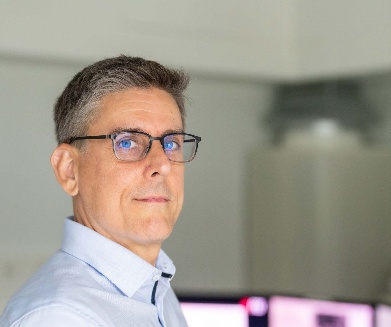
Florian Meier,副教授,博士生导师
Email: f.meirer@uu.nl
【工作经历】
2021年-至今,乌得勒支大学(荷兰),副教授(具有博士学位授予权)
2020年-2021年,乌得勒支大学(荷兰),副教授;
2013年-2020年,乌得勒支大学(荷兰),助理教授;
2010年-2013年,布鲁诺·凯斯勒基金会(意大利),博士后研究(丽·居里联合基金);
2009年-2010年,斯坦福同步辐射光源(美国),博士后(埃尔温·薛定谔奖学金);
2008年-2009年,维也纳工业大学(奥地利),博士后;
【个人介绍】
Florian Meirer,理学博士,现为荷兰乌得勒支大学副教授,自2025年9月1日起兼任可持续与循环化学研究所科学主任。他的研究聚焦于功能材料表征方法的发展与应用,尤其是X射线显微镜与光谱技术,涵盖光谱学、显微学及光谱-显微结合技术。他研究的对象包括分层复杂的多孔材料,从固体催化剂到艺术与文化遗产材料,以及环境中的各类物质,如微塑料和纳米塑料。他通过将光谱显微学与催化、环境分析、数据挖掘及化学计量学相结合开展研究。Meirer博士出生于奥地利维也纳,先后学习技术物理学,并曾在美国斯坦福同步辐射实验室(2009–2010)和意大利布鲁诺·凯斯勒基金会(2010–2013)从事博士后研究。2013年5月,他加入ICC研究小组,担任助理教授。
他的团队开发并使用多种光谱显微技术以研究催化和环境分析等领域的功能性纳米材料。在非均相催化领域,他专注于通过X射线显微镜、超高分辨定位显微技术和扩散模拟来理解催化剂内部的传质。他参与的项目有环境分析、数据挖掘、通过关联高光谱成像方法为古油画修复工作提供决策与支持,以及研究纳米塑料及其对环境的影响。
作为UPlasticS3的成员,Florian Meirer参与了对纳米塑料的研究。纳米塑料用传统技术难以检测。通过使用高度专业化的技术,他的团队能够测量这些微小的颗粒,最小甚至达到头发宽度的千分之一。研究的目标还包括测量这些颗粒的类型和寿命,以理解它们如何形成并与环境的相互作用。目前,该团队正在努力在组织和血液中检测纳米塑料,这尤其具有挑战性。如果这一目标实现,不仅可以检测塑料本身,还能评估其潜在的毒理学效应。
【近年来发表的代表性论文】
1. Fluorescent-Probe Characterization for Pore-Space Mapping with Single-Particle Tracking, Angew. Chem. Int. Ed., 2024;
2. Spectro-Microscopic Techniques for Studying Nanoplastics in the Environment and in Organisms, Angew. Chem. Int. Ed., 2023;
3. Classification-based motion analysis of single- molecule trajectories using DiffusionLab, Sci. Rep., 2022;
4. 3-D X-ray Nanotomography Reveals Different Carbon Deposition Mechanisms in a Single Catalyst Particle, Chem. Cat. Chem., 2021
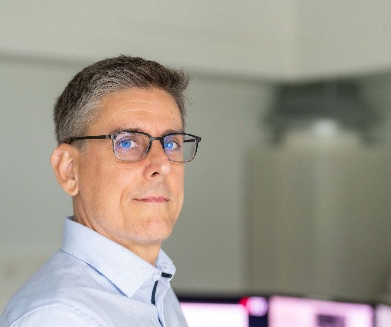
Florian Meier,Associate Professor, PhD supervisor
Email: F.Meirer@uu.nl
【Work Experience】
2021–Present: Associate Professor (with the right to supervise PhD students), Utrecht University, The Netherlands
2020–2021: Associate Professor, Utrecht University, The Netherlands
2013–2020: Assistant Professor, Utrecht University, The Netherlands
2010–2013: Postdoctoral Researcher, Fondazione Bruno Kessler, Italy (Marie Curie Cofund Fellowship)
2009–2010: Postdoctoral Researcher, Stanford Synchrotron Radiation Lightsource, USA (Erwin Schrödinger Fellowship)
2008–2009: Postdoctoral Researcher, Vienna University of Technology, Austria
【Biography】
Florian Meirer, ScD, is an Associate Professor at Utrecht University, the Netherlands and as of September 1, 2025, the Scientific Director of the Institute for Sustainable and Circular Chemistry (ISCC). He works on the development and application of spectroscopic, microscopic, and spectro-microscopic techniques for characterizing functional materials with a focus on X-ray microscopy and spectroscopy. He studies hierarchically complex porous materials, ranging from solid catalysts to materials from art & cultural heritage, as well as agents in the environment, such as micro- and nanoplastics. He does so by combining spectro-microscopy with catalysis, environmental analysis, data mining and chemometrics. He was born in Vienna, Austria where he studied technical physics followed by post-doctoral stays at the Stanford Synchrotron, USA (2009-10), and the Fondazione Bruno Kessler, Italy (2010-13). In May 2013 he joined the ICC group in Utrecht as Assistant Professor.
His team develops and applies a range of spectroscopic and microscopic techniques to study functional nanomaterials in fields such as catalysis and environmental analysis. In heterogeneous catalysis, he focuses on understanding mass transport within catalysts using X�ray microscopy, ultra�high�resolution localization microscopy, and diffusion modeling. His projects include environmental analysis, data mining, providing decision support for the restoration of historical oil paintings through correlative hyperspectral imaging, and studying nanoplastics and their environmental impacts.
As a member of UPlasticS3, Florian Meirer participates in research on nanoplastics, which are difficult to detect with conventional techniques. By employing highly specialized methods, his team is able to measure these tiny particles, with some as small as one�thousandth the width of a human hair. The research also aims to determine the types and lifetimes of these particles to understand how they form and interact with the environment. Currently, the team is working on detecting nanoplastics in tissues and blood, which is particularly challenging. Achieving this goal would allow not only the detection of the plastics themselves but also an assessment of their potential toxicological effects.
【Selected Publications】
1. Fluorescent-Probe Characterization for Pore-Space Mapping with Single-Particle Tracking, Angew. Chem. Int. Ed., 2024;
2. Spectro-Microscopic Techniques for Studying Nanoplastics in the Environment and in Organisms, Angew. Chem. Int. Ed., 2023;
3. Classification-based motion analysis of single- molecule trajectories using DiffusionLab, Sci. Rep., 2022;
4. 3-D X-ray Nanotomography Reveals Different Carbon Deposition Mechanisms in a Single Catalyst Particle, Chem. Cat. Chem., 202